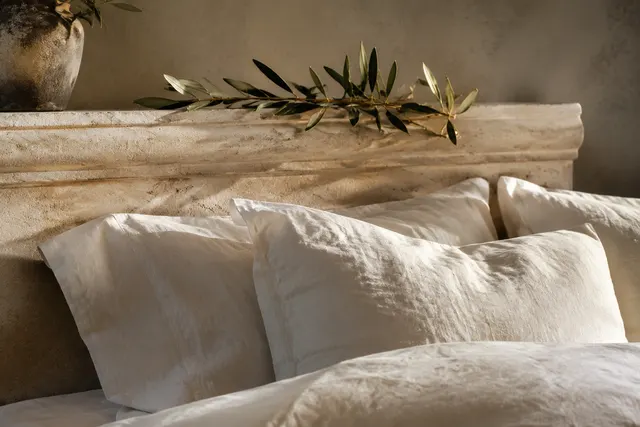

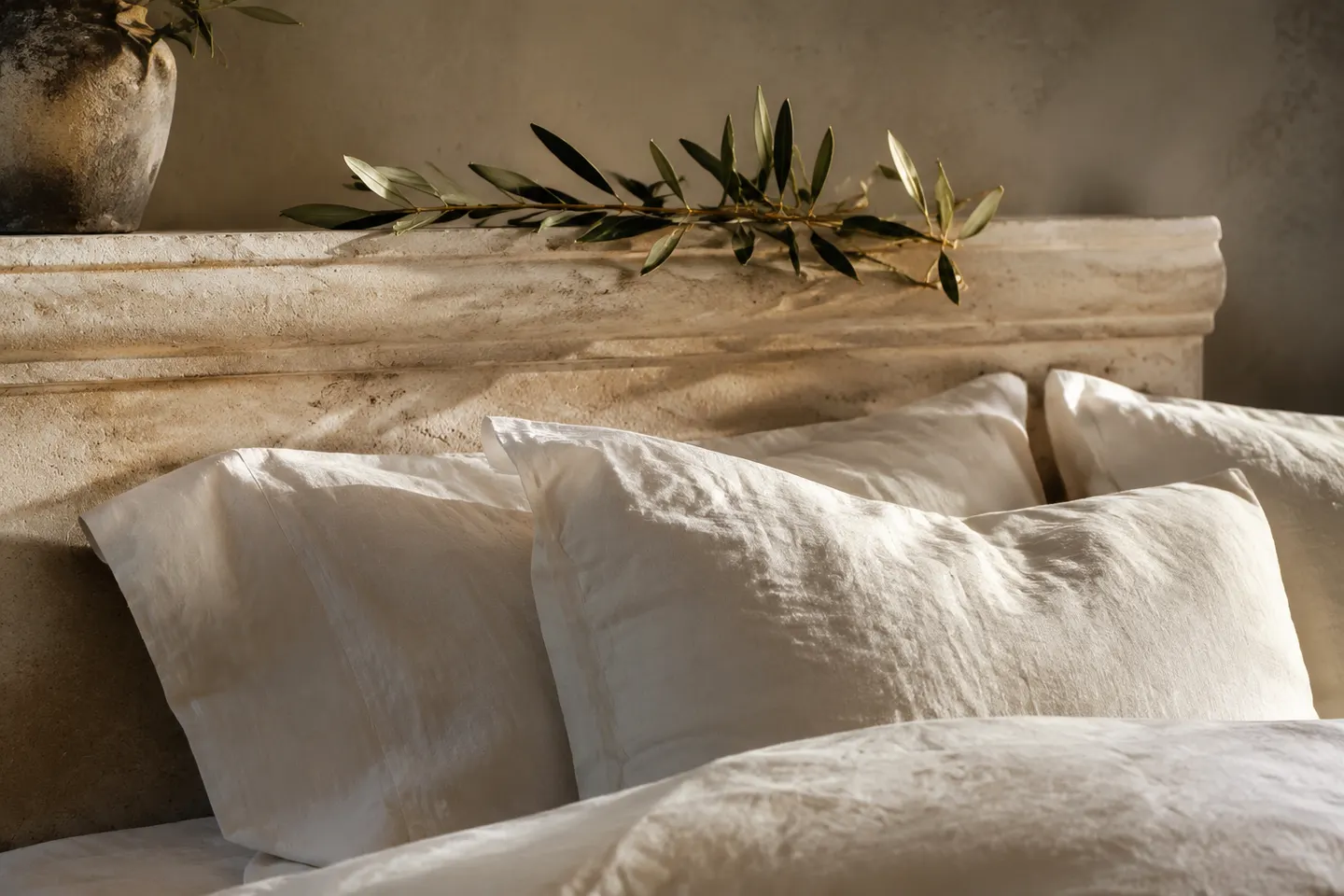
There are several ways to dress a luxury hotel room. We chose the slowest, the heaviest, and the one that took longest to ship.
When we renovated the suites in 2016 we spent more time on the beds than on anything else in the building. The reason is simple. A guest in Lindos walks fifteen thousand steps a day across uneven stone, in the heat, climbing to the Acropolis and back. By eleven at night they are not looking for a designer chandelier or a marble bath. They want to lie down. The mattress is the single largest variable in whether they will love their stay.
We looked at the obvious international names. Most of the hotels in our category in the Aegean use one of three or four Italian or American brands, and the salesmen will tell you why theirs is best. We listened to them all. Then we drove to Athens and visited the COCO-MAT® workshop at Markopoulo, on the eastern edge of Attica, and the decision more or less made itself.
COCO-MAT® was founded in 1989, the same year our family opened the first version of this hotel. The company makes mattresses, pillows, bed linen and furniture from natural materials only — no springs, no foams, no chemicals. The mattress core is built from layers of coconut fibre, natural latex from rubber trees, sheep’s wool, horsehair, seaweed, cotton, and the occasional layer of pressed cactus fibre. Pillows are filled with goose down or with a mixture of lavender flowers and orange-blossom water that smells, faintly and persistently, of a Greek summer evening.
The mattresses are heavy. A king-size weighs around forty-five kilograms. Two of our staff move them with difficulty. They are not flipped — they are turned on a quarterly schedule that the housekeeping team keeps track of in a paper notebook in the office. Every bed in this hotel, all twenty-one suites, has the same configuration: a COCO-MAT® base, mattress, and topper. We have no hard-firm-soft choice on the booking form, because we have spent enough years in this trade to know that the average guest does not actually want to choose; they want to sleep.
What this means in practical terms is that the bed adapts to the body rather than the other way round. The natural latex compresses where there is weight and rebounds where there is none. The wool layer absorbs the body’s moisture, which is the largest single cause of overheating in the night. The cotton outer layer is washable and is washed monthly. None of this is marketing language; it is the actual specification.
We have other beds in our extended family. The owner sleeps on a COCO-MAT® at home in Lindos. Two of the housekeeping team have asked, over the years, whether they could buy the floor model when we rotate the inventory; we have said yes both times. The relationship with the company is now in its tenth year, and every replacement bed we have ordered has arrived within the promised window.
We pair the beds with linen from COCO-MAT®’s textile workshop near Xanthi in northern Greece. The sheets are long-staple Egyptian cotton, sateen weave, four hundred thread count. They are not the highest thread count on the market, because thread count beyond a certain point becomes a marketing trick — denser sheets sleep hotter. Four hundred is the right number for the Lindos climate.
The full COCO-MAT® system in our suites is the single largest line item in the renovation budget. It is not a competitive line item. There are cheaper beds that work fine. There are more expensive beds that do not work better. What COCO-MAT® delivers, and what we wanted, is a bed that you forget about within ten minutes of lying down. The morning after a long walk in Rhodes, that absence of memory is the highest compliment a mattress can earn.