
How to spend twenty-four hours in Lindos without rushing — from first light on the Acropolis to a quiet rooftop after dinner.
Lindos rewards travellers who arrive early and stay late. By eleven in the morning the village fills with day-trippers from the cruise ships at Rhodes Town; by six it empties again. The trick to a perfect day here is to use both of those quiet windows, and to spend the bright middle hours where the locals do — in the shade, by the water, or behind shuttered courtyards.
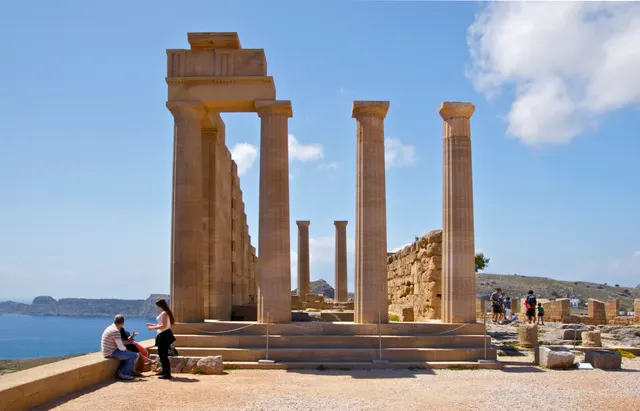
Begin before seven. The path to the Acropolis opens to visitors at eight in summer, but the village itself is yours an hour earlier. Walk the upper sokakia while shopkeepers are still sweeping, climb the cliff path past Saint George’s chapel, and reach the gates as they open. The 4th-century BC Doric temple of Athena Lindia stands at 116 metres above the sea, and at that hour the light hits the Hellenistic trireme carved into the rock at the base of the propylaea steps from a long, low angle. You can read every oar.
Come down by nine-thirty for a slow Greek breakfast. Thick strained yogurt, thyme honey from the hills above Lardos, hand-rolled fyllo pies, oranges from the groves at Massari, hand-squeezed juice. Not a buffet. The breakfast at Lindos Comfy Suites is served on the terrace until eleven, which buys you time to write postcards before the heat.
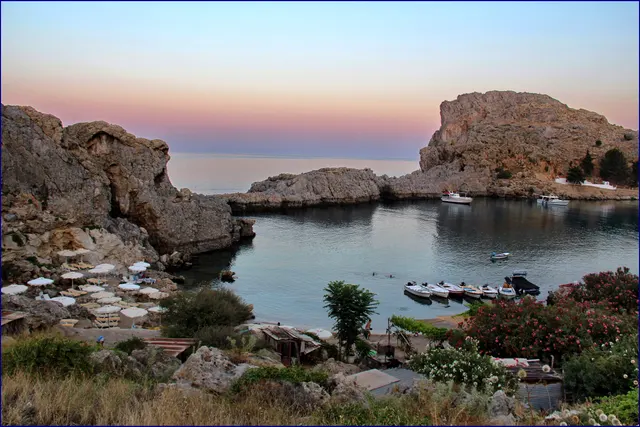
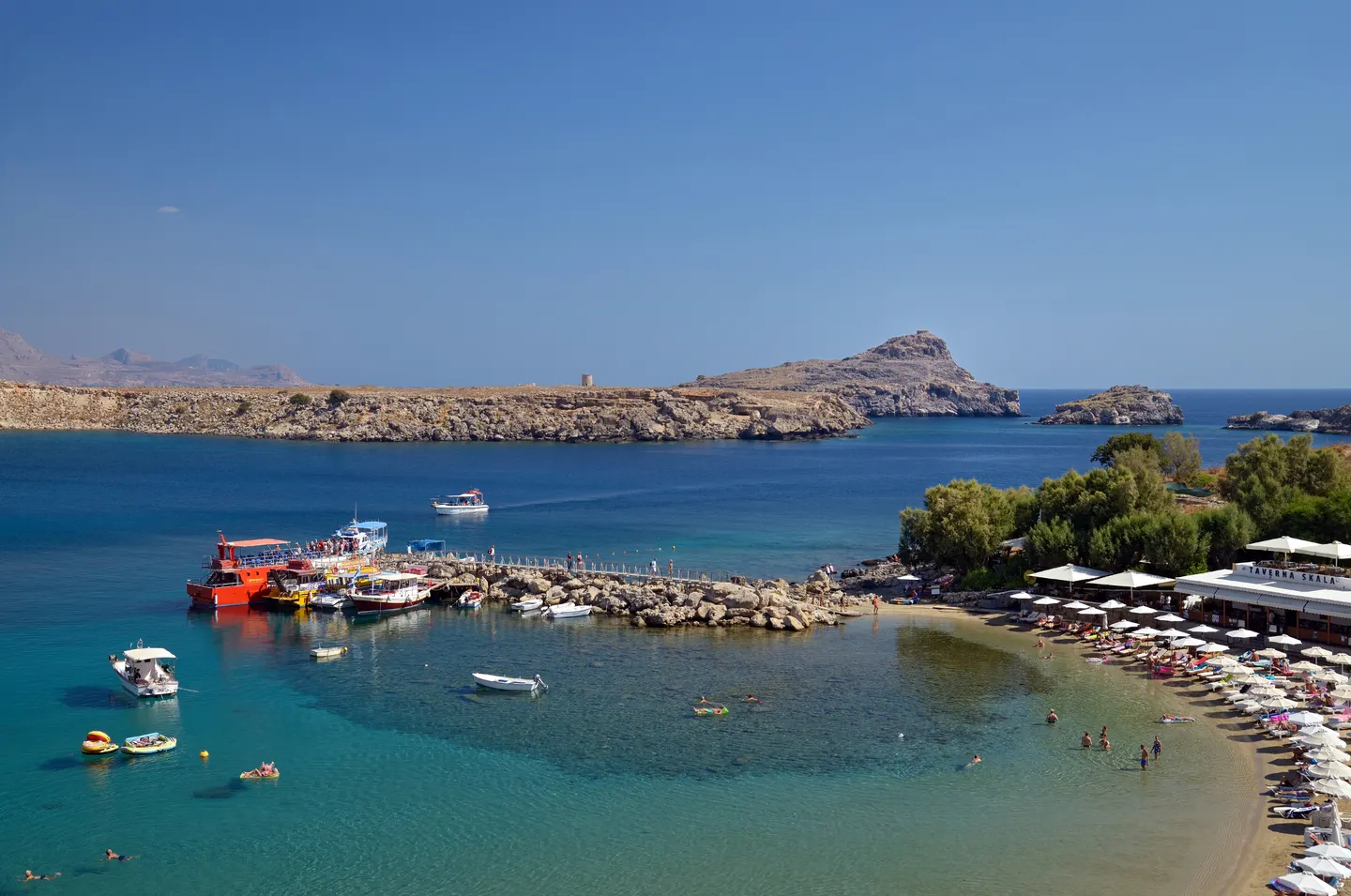
The middle of the day belongs to the sea. Saint Paul’s Bay is a five-minute walk below the village — a near-perfect circle of turquoise water enclosed by limestone cliffs, with a small whitewashed chapel on its western edge. Tradition says the apostle landed here in AD 51 during a storm; today the only storms are the brief afternoon meltemi gusts that ripple the bay. Bring a book and stay until the worst of the heat passes.
From two until five, Lindos retreats indoors. So should you. The captains’ houses of the village, built in the seventeenth and eighteenth centuries from the wealth of Aegean trade, have interior courtyards paved in chochlakia — black and white pebble mosaics laid in geometric patterns. Several are open to visitors for a small fee. The Papakonstantis Mansion is the finest, with carved wooden ceilings and Iznik tiles set into the walls.
By six the light has softened. This is the hour to walk the cliff path above Saint Paul’s, where the donkey-cart road bends around the headland and the sea opens out to the south. The chapel of Saint George the Pachymachiotis sits at the bend; its small rooftop, reached by a stair on the seaward side, is the village’s most reliable sunset spot and almost always empty.
Dinner in Lindos is a long affair. The kitchens open at half past seven and the village fills again, but in a quieter, slower way than at midday. Mavrikos on the main square has been serving since 1933 and remains the benchmark for octopus carpaccio and grilled fish from the boats at Charaki. Book ahead. After dinner, the village is yours once more — the cruise crowds long gone, the cats settled on the warm stones.
End the night with a glass of Athiri from Embonas on the rooftop. The lights of Pefkos blink to the south; the Acropolis is a black silhouette above. There is no real nightlife here in the Mykonos sense, and the absence is the point. Lindos at midnight is the Lindos that has existed for three thousand years, give or take a streetlamp.
A practical note for those building this kind of day. The cruise tours dock at Mandraki in Rhodes Town and bus their passengers down the east coast, arriving at Lindos between half past ten and eleven. They depart again between four and half past four. If you plan your morning and your late afternoon around those two windows, you will have the village to yourself in the hours when it is most worth having. Most repeat visitors learn this on their second stay; we mention it on the first.