
Lindos faces east. The sunset here is not a single famous spot but a sequence of small ones — and a kind of light that lasts almost an hour.
Travel writers visiting the Aegean tend to default to Santorini when they need a sunset shot, and there is a reason. Santorini’s caldera faces west and the sun drops into open water. Lindos faces east, looks across the same sea toward the Turkish coast, and at first glance has no sunset at all. The trick is that the village sits high enough on its rock that the light over the western hills bounces back across the cliff faces and lasts, gold and pink and finally violet, for nearly an hour. You just have to know where to stand.
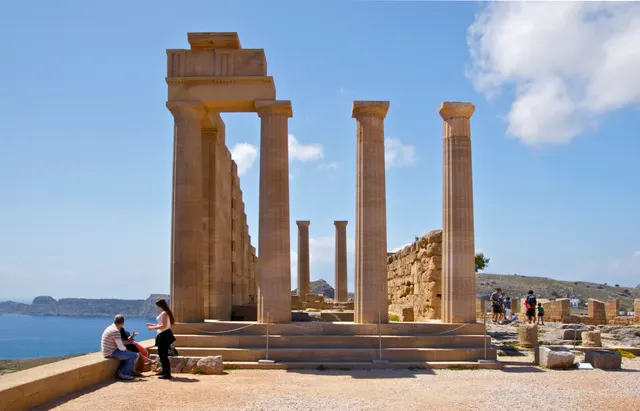
The rooftop of the Acropolis. The site officially closes at half past three in winter and seven in summer, but in the last hour of opening the crowds thin and the light is at its best. Stand at the southern edge of the temple platform and look back across the village. The whitewashed houses of Lindos catch the warm light and the cliff faces of the headland glow rose-gold against the deepening blue of Saint Paul’s Bay. This is the highest free viewpoint in the village and the one with the best framing of every other.
The terrace of Mavrikos. The Mavrikos family has been serving on the main square since 1933, and their roof terrace, reached by a small staircase from the dining room, opens for drinks before dinner. The view is north, over the lower village, toward the Acropolis rock. The sun itself is behind you, but the rock itself becomes a colour board for the next forty minutes — pale yellow, then apricot, then a deep coral that holds for several minutes before the violet sets in. Order a glass of Athiri and stay.
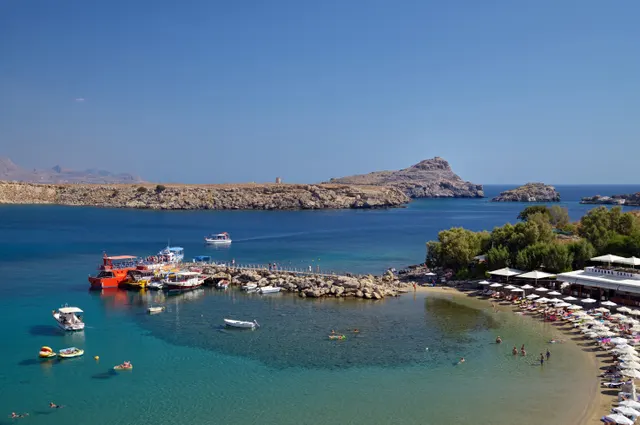
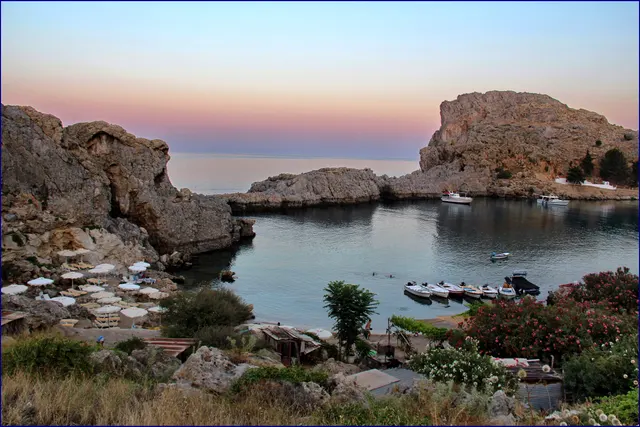
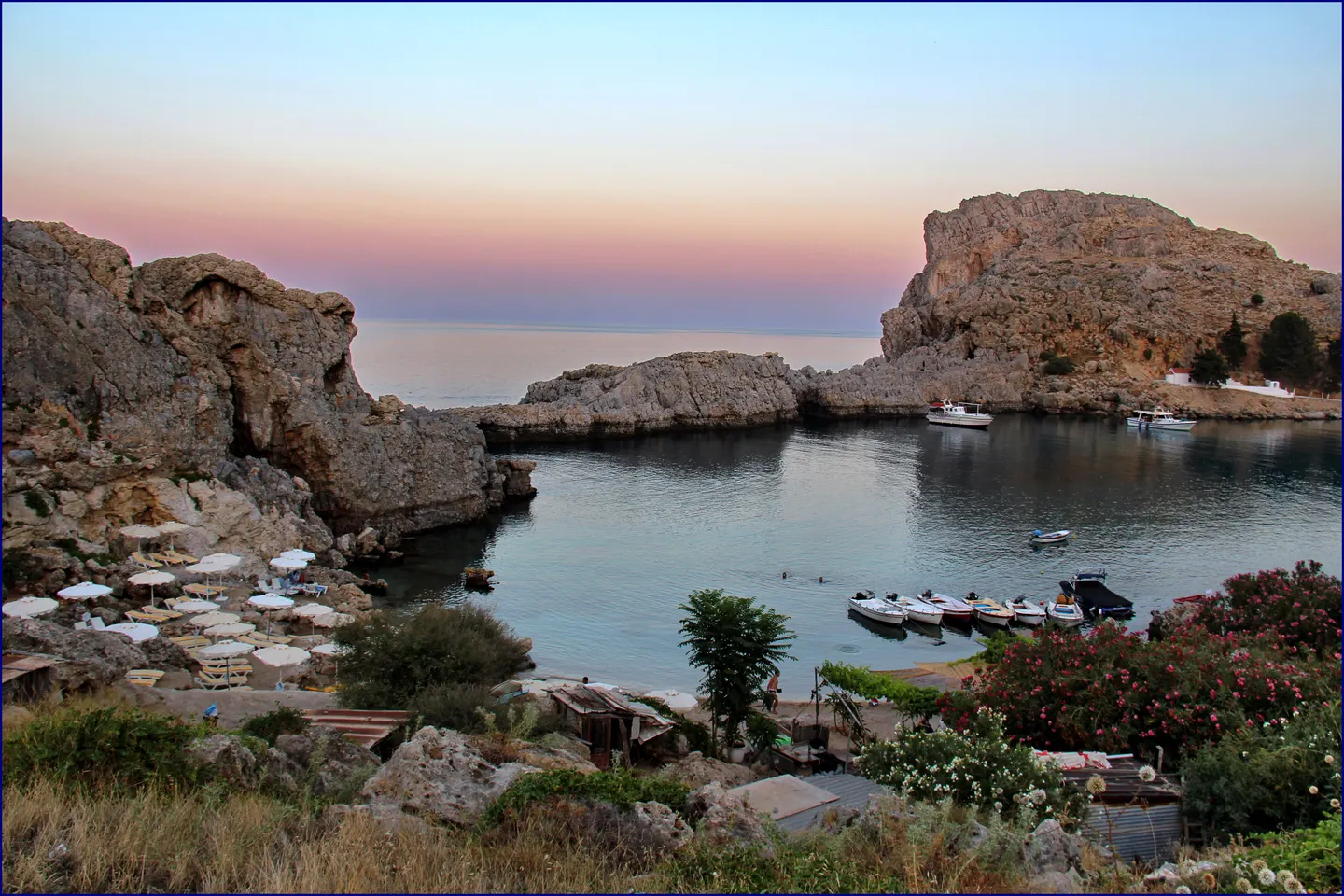
The cliff path above Saint Paul’s. From the eastern edge of the village, the donkey-cart road bends around the headland and continues past Saint George’s chapel toward the open sea. Walk it slowly. At the bend, where the bay first opens, sit on the low wall on the seaward side. The Acropolis is on your left, the bay below, and the colour of the cliff at this hour is one of the things people who have lived here all their lives still stop to look at.
The rooftop of Saint George Pachymachiotis. The small chapel above Saint Paul’s has a flat roof reached by a stone stair on the sea side, and almost no one goes up there. From the roof you have the full sweep of the eastern coast to your right, the bay below, and the Acropolis rising directly behind. We send guests here often. Bring a small bottle of something to share and a friend.
The terrace at Lindos Comfy Suites. We will keep this one short because we are the hotel. The west-facing terrace has a clean line of sight across the rooftops of the lower village toward the hills behind, which is where the actual sun goes down. The light here lasts later than at any of the cliff viewpoints because the building sits low enough to catch the second wave of pink as it bounces off the cliff face above.
The beach below. After the sun has fully set, the village retreats to its tavernas and the main beach empties almost completely. Walking the wet sand at the water’s edge in the half-light, with the cliff rising blue-black behind, is a thing most visitors miss because they go to dinner. Eat later. The beach at nine in the evening, with the last light just gone, is one of the quietest places in Lindos.
A practical note. The sun rises behind the Acropolis at about six and sets behind the western hills around eight in midsummer, half past five in October. The cliff colour lasts about forty minutes after the sun is technically gone — give yourself a full hour. Wear something with sleeves; the breeze drops at sundown and the temperature can lose six or seven degrees within twenty minutes.